

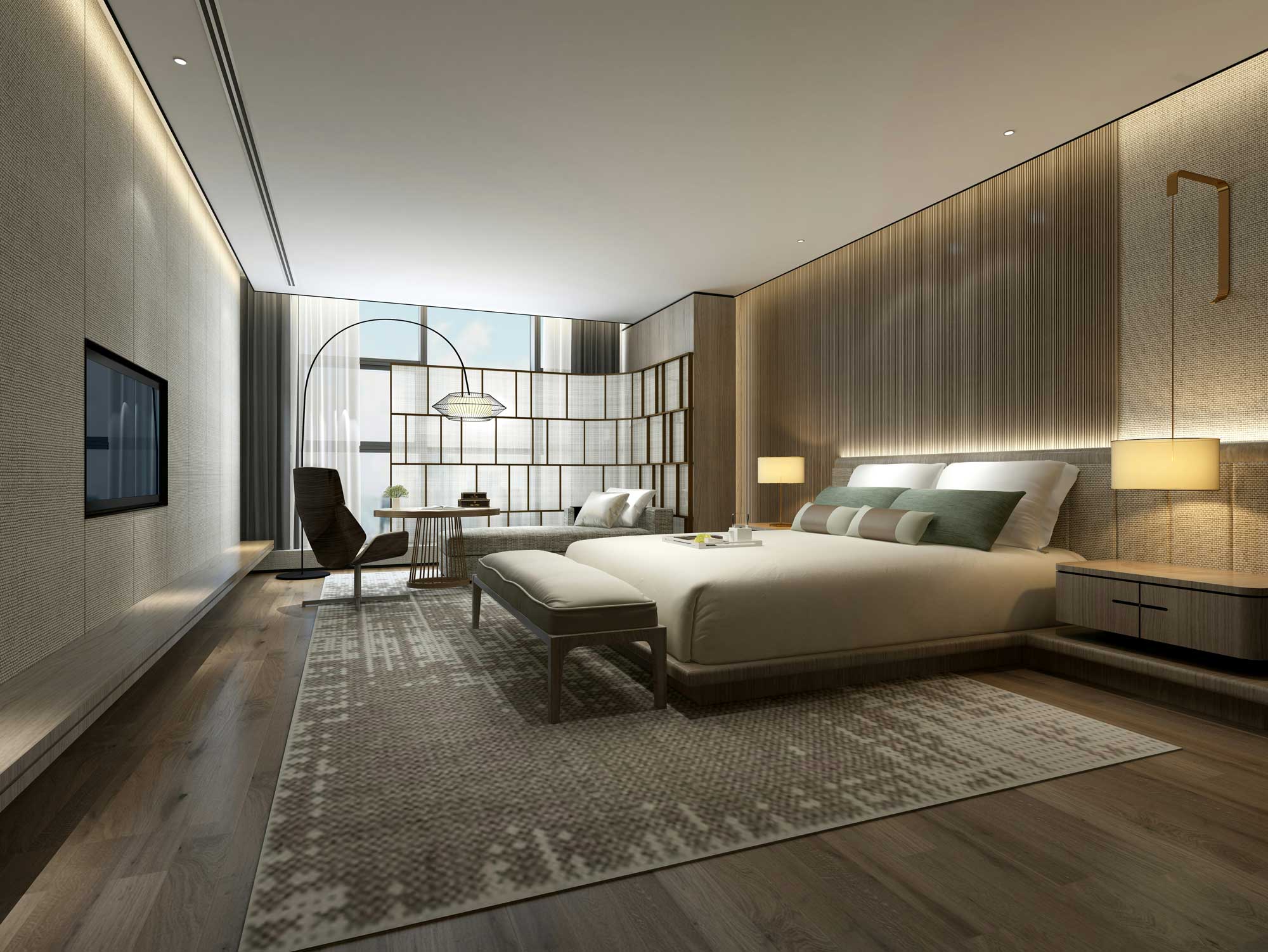
Hotel lighting design plays a central role in shaping the guest experience. From the moment a guest arrives, lighting influences how a space is perceived, how it feels to move through it, and how comfortable it is to spend time within.
Unlike other commercial environments, hotels must cater to a wide range of functions within a single scheme. Reception areas, lounges, restaurants, bars and guest rooms all require different approaches, while still maintaining a cohesive design language.
First impressions: reception lighting
The reception area is often the first point of contact, making lighting here particularly important. It sets expectations and establishes the tone for the rest of the stay.
A well-lit reception should feel welcoming, balanced and easy to navigate. Ambient lighting provides the overall base, while feature lighting can be used to create a focal point, such as a statement pendant or chandelier above the desk.
Accent lighting can then be layered in to highlight architectural details, artwork or materials, adding depth and visual interest. In higher-end hotel environments, this layered approach helps create a sense of quality and refinement.

Creating atmosphere in hotel restaurants and bars
Hotel restaurants and bars require a more considered and atmospheric lighting approach. These spaces often transition throughout the day, from brighter breakfast settings to more intimate evening environments.
Layered lighting is essential. Ambient lighting should be soft and warm, avoiding harsh overhead illumination. Task lighting at tables ensures guests can comfortably see menus and food, while accent lighting can be used to highlight key areas such as bars or feature walls.
Decorative lighting plays a particularly important role in these spaces. Pendant lights, wall lights and feature fittings help define zones and reinforce the interior design concept, while also contributing to the overall atmosphere.
Guest room lighting: flexibility and comfort
Guest rooms present a different set of challenges. Lighting needs to be functional, flexible and comfortable, supporting a variety of uses from relaxation to work.
A combination of lighting types works best:
- Ambient lighting for overall illumination
- Task lighting for reading and working
- Accent lighting to create a softer, more layered feel
Control is also important. Guests should be able to adjust lighting levels to suit their preferences, whether that is dimming lights in the evening or increasing brightness during the day.
Consistency across guest rooms is key, but small variations in decorative lighting can also help add character and align with the overall hotel design.
Maintaining consistency across the hotel
While each area within a hotel has its own lighting requirements, the overall scheme should feel cohesive. This can be achieved through consistent finishes, materials and design language across fittings.
For example, using similar metal finishes or glass types throughout different areas can help create a sense of continuity, even when the lighting itself varies in form or scale.
This consistency is particularly important in larger hotel projects, where multiple spaces need to feel connected.
Practical considerations in hotel lighting design
In addition to aesthetics, practical considerations are essential in hotel environments.
Durability is important, particularly in high-traffic areas such as reception spaces and corridors. Lighting must be robust enough to withstand regular use while maintaining its appearance.
Maintenance should also be considered from the outset. Easy access to fittings and replaceable components can help reduce long-term operational costs.
Working with experienced lighting suppliers in the UK can support both the design and technical aspects of a project, ensuring fittings are suitable for commercial use and aligned with project requirements.
Supporting the overall guest experience
Ultimately, hotel lighting design should enhance how guests experience the space. It should feel intuitive and comfortable, even though it has been carefully planned.
Effective lighting helps to:
- Create a welcoming first impression
- Support different uses across the hotel
- Enhance atmosphere in key areas
- Reinforce the overall design concept
When these elements come together, lighting becomes a key part of what makes a hotel memorable.