

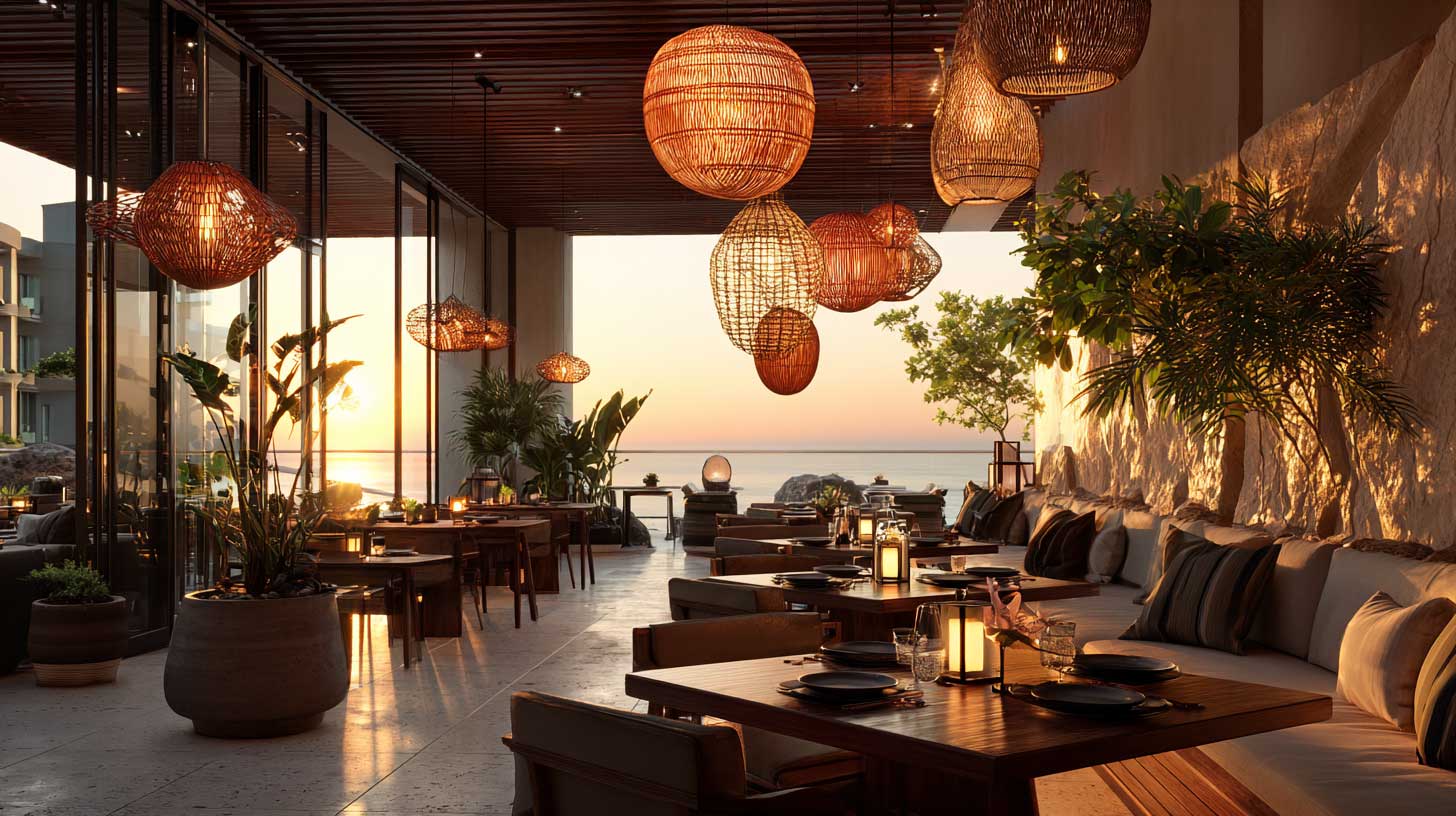
As the days grow longer and the way guests use a space shifts with the seasons, lighting needs to shift with them. Summer brings looser hours, more daylight, more time spent outdoors and a different kind of atmosphere; one that operators and designers have to plan for, not simply hope happens.
The hospitality and commercial venues working hardest this summer are the ones treating decorative lighting as a design lever rather than a finishing touch. Here’s what we’re seeing across the projects coming through our studio in 2026.
Indoor and outdoor as one continuous scheme
The traditional line between an interior lighting design and the world outside the window is dissolving. Restaurant terraces, rooftop bars, courtyard dining and members’ garden spaces are now expected to feel like part of the same room, not an afterthought bolted on once the weather turns.
That has changed how decorative lighting is specified for summer. Designers are choosing pieces with a finish and form that read consistently across both zones. A portable lamp on an indoor banquette can move outside as guests migrate; a pendant family is used at two scales above an interior bar and a pergola; wall lights echo the architectural language of the building rather than disappearing into it.
The result is a smoother visual transition from inside to out, and a venue that holds its atmosphere as the sun drops.
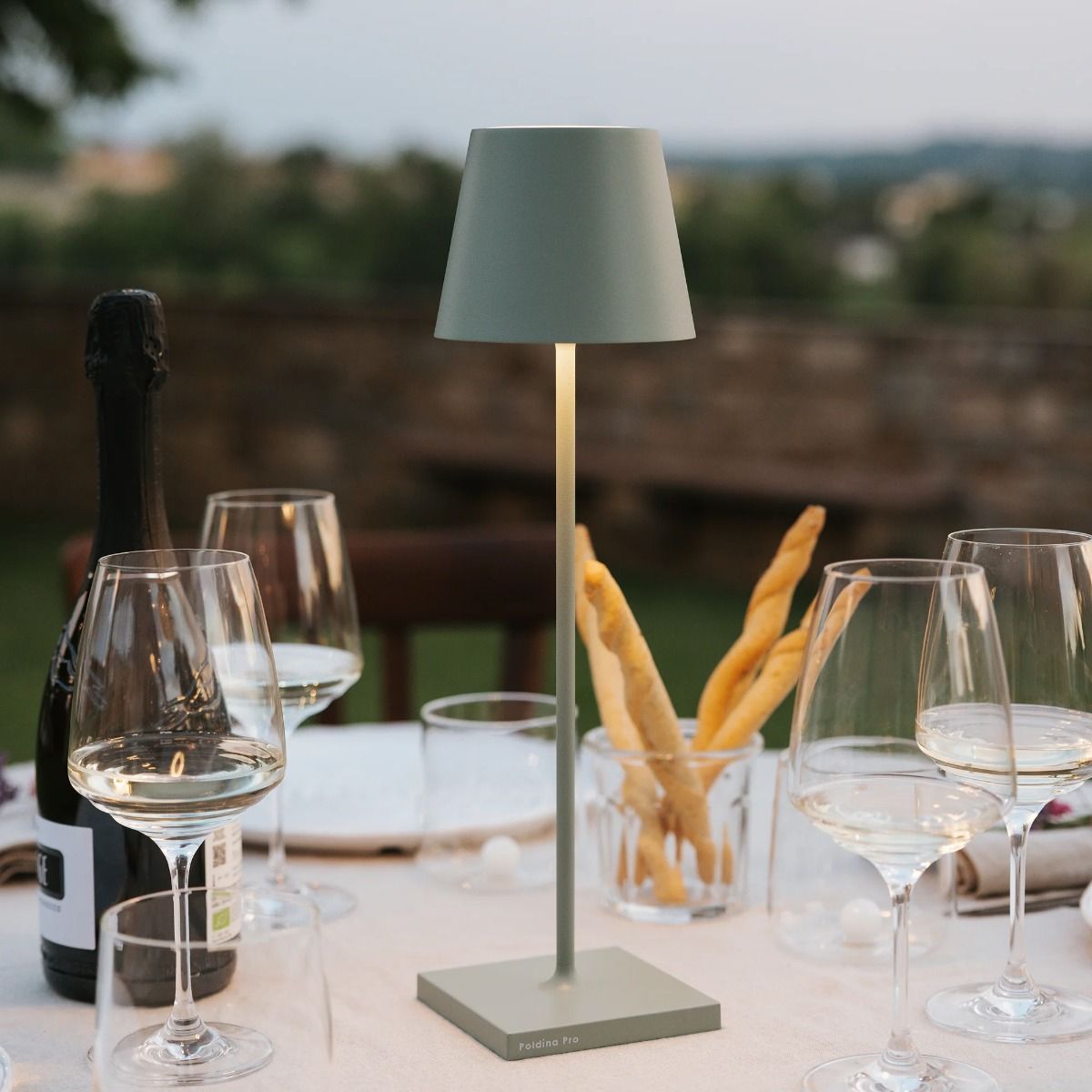
The portable, cordless table lamp continues to dominate
If 2025 was the year cordless lamps became mainstream in hospitality, 2026 is the year they’ve become non-negotiable. Restaurants, bars, hotels and members’ clubs are ordering them in volume, and using them with confidence.
Why they’ve stuck: they offer designers the warmth of a shaded table light without the headache of cabling every cover, they let operators reconfigure a room without an electrician, and they give guests that intimate pool of light at eye level that overhead lighting alone simply can’t deliver. Battery life and charging behaviour have caught up with operational reality, and the design language has matured well beyond its early novelty period.
For summer, expect to see them on outdoor tables, terrace bars, poolside and increasingly in private dining set-ups where flexibility matters as much as finish.
Sculptural pendants that hold their own in daylight
Decorative pendants used to be designed for the evening. In summer hospitality, that’s no longer enough. With long daylight hours and bright, glazed venues, a pendant has to read as sculpture as much as a light source. It needs presence in the room when it isn’t switched on.
We’re seeing pleated shades, oversized scallops, hand-finished silks and natural materials used in pendants that earn their place visually before any bulb is dimmed. In commercial settings such as receptions, atriums and breakout zones, that sculptural quality also gives a brand a focal point that photographs well, which matters more than most briefs admit.
A clear shift toward natural and considered materials
Summer has a way of making synthetic finishes feel out of step. Across the briefs we’re working on, designers are asking for more pleated and rolled silks, hand-finished metals, ceramics, woven shades and finishes that show the maker’s hand. Not so much a ‘trend’ as a settled direction, but one that summer renews each year.
This also reflects the growing weight that operators are giving to longevity and sustainability. A piece that ages well and can be re-shaded, re-finished or moved between sites tends to win out over a fashionable one that needs replacing in two seasons.
Decorative lighting designed for outdoor use
Genuine outdoor-rated decorative pieces, not just patio strings, are finally arriving in the kinds of finishes designers have wanted for years. That’s opening up courtyards, terraces and rooftops to the same level of lighting design as the interior.
The brief here is usually about atmosphere: low, warm, layered light at human scale, rather than a flat wash from overhead. Wall lights, lanterns and pole-mounted pieces with a decorative sensibility are doing the work, and increasingly being specified at design stage rather than added later.
Putting it into practice
If you’re shaping a scheme this summer, three principles tend to hold:
- Layer first. Don’t rely on any single fixture to do the work; build in ambient, task and accent layers and use decorative pieces to bring rhythm and warmth at human scale.
- Plan for daylight as well as evening. The same piece needs to work at 11am and 11pm. Test in both conditions wherever you can.
- Design for movement. The way guests move through a venue in summer is different. Lighting that can be repositioned, re-aimed or carried supports that flow.