

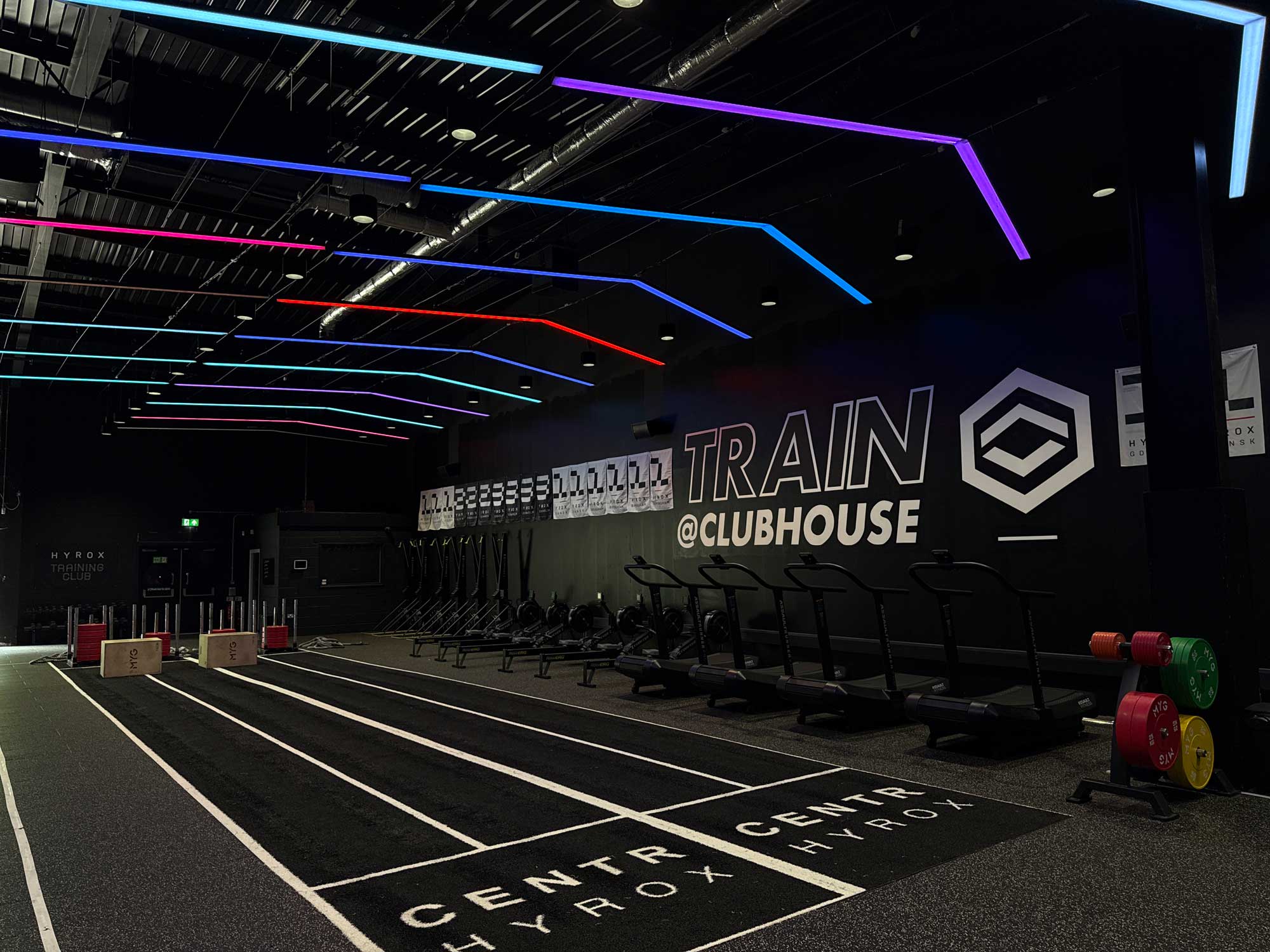
Lighting has a significant impact on how people experience leisure environments, influencing everything from comfort and concentration through to mood and wellbeing.
Whether designing for a gym, wellness facility, members’ club or leisure venue, lighting should be considered as an integral part of the user experience rather than simply a functional requirement.
Understanding how people use the space
Every leisure environment is different.
A fitness studio requires a different lighting approach to a café, reception area or social space. Understanding how people move through and interact with a space is the first step in developing an effective lighting scheme.
Factors that influence design decisions include:
- User activity
- Length of occupancy
- Time of day
- Desired atmosphere
- Functional requirements
These considerations help shape both the technical and decorative aspects of the scheme.

Reducing glare and improving comfort
Visual comfort is particularly important in active environments.
Poorly positioned fittings can create glare, reflections and visual distractions that negatively impact the user experience. In fitness environments, this can affect concentration and comfort during exercise.
Carefully considered lighting layouts help create a more comfortable environment while supporting safe movement throughout the space.
Supporting wellbeing
Lighting has a powerful influence on how a space feels.
Layered lighting can help create a welcoming atmosphere, while carefully controlled light levels contribute to a sense of comfort and balance. This is particularly important in leisure and wellness settings where people are looking to relax, socialise or improve their physical wellbeing.
A successful scheme supports both the practical function of the space and the emotional experience of the people using it.
Creating flexibility
Many leisure environments serve multiple purposes throughout the day.
A space may transition from daytime activity to evening events, requiring different lighting levels and moods. Layered lighting allows operators to adapt the environment to suit changing requirements without compromising functionality.
Combining decorative fittings, ambient lighting and feature lighting provides the flexibility needed for modern leisure spaces.
Bringing performance and design together
The best leisure lighting schemes strike a balance between technical performance and visual impact.
Lighting should support the activities taking place within a space while contributing to the overall design vision. When considered carefully, it becomes a powerful tool for enhancing user experience, improving comfort and creating environments people want to return to.
As leisure environments continue to evolve, lighting will remain a key factor in shaping how people experience and engage with these spaces.